
Best digital marketing strategies for small businesses
October 5, 2026
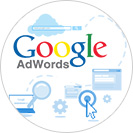




Google’s AI Overviews are changing what happens between a search query and a website visit. Instead of displaying only a list of links, Google may generate a summary that combines information from several web sources, presents supporting links and helps the searcher explore related questions. Businesses can still earn organic visibility, but a high ranking no longer guarantees the same click-through rate for every query.
The practical response is not to abandon search engine optimisation. Businesses need technically accessible websites, clear answers, credible supporting information and pages that offer more value than a short generated summary can provide. SEO now has to support traditional rankings, local results, commercial discovery and visibility within AI-assisted search experiences.
Siteweb services that support search visibility and lead generation
AI-generated search results affect more than blog content. They sit within a broader customer journey that may include local listings, paid search, social discovery and direct website visits. Siteweb Online Marketing provides several services that can support this journey:
- Search engine optimisation services for improving technical performance, content relevance and organic visibility.
- Generative engine optimisation for making useful business information easier for AI-assisted search systems to interpret and reference.
- Google Business Profile optimisation for stronger local discovery and more accurate business information.
- Google Ads management for maintaining targeted search exposure when organic clicks are limited or highly competitive.
- Social media marketing for building demand and brand recognition beyond search results.
What Google AI Overviews are
An AI Overview is a generated response that Google may display for a search query when its systems determine that a summary could help the user. The overview can combine concepts from multiple sources, include links to supporting pages and suggest follow-up searches. Its appearance, layout and cited sources can vary by query, user, device, location and ongoing product changes.
AI Overviews are part of Google Search rather than a separate search engine. Google’s established crawling, indexing and ranking systems therefore remain relevant. A page generally needs to be accessible and eligible for indexing before it can receive meaningful search visibility. There is no special AI Overview schema type, submission form or guaranteed method of being selected as a supporting source.
Google also states that the standard SEO practices described in its Search Essentials remain applicable to AI features. This means that useful content, crawlable pages, descriptive internal links, sound page experience and compliance with spam policies remain the foundation.
How AI Overviews are changing Google SEO
Informational searches can end without a website visit
A generated summary may answer a basic question directly on the results page. Searches involving definitions, simple comparisons, short processes or introductory research may therefore produce fewer clicks, even when a website continues to rank well. This is often called zero-click search behaviour.
Traffic should not be treated as the only measure of success. If fewer people click, the visitors who do arrive may be further along in their research. The commercial question is whether those visits produce enquiries, calls, bookings or sales. Businesses should compare organic traffic with conversion quality rather than assuming that every decline in page views represents an equal decline in business value.
Visibility can come from supporting links, not only the first blue result
AI Overviews may link to pages used to support or expand the generated response. This gives relevant pages another possible route to search visibility. Selection is not limited to repeating an exact keyword. A page can be useful because it explains a specific part of a wider subject, provides evidence, answers a follow-up question or covers an aspect that other sources overlook.
This makes topic coverage more valuable than creating many thin pages around slight variations of the same phrase. A strong main page can explain the subject broadly, while supporting pages address practical concerns such as costs, comparisons, implementation, risks, industry applications and local requirements.
Search journeys are becoming more detailed
A searcher can move from a broad question to a detailed follow-up without leaving Google. For example, a South African business owner may begin by asking how AI Overviews affect website traffic, then explore how to measure referrals, improve local visibility or decide whether an SEO agency understands generative search.
Content planning should reflect the full decision journey. Introductory information can establish relevance, but businesses also need content that helps readers evaluate options and act. Service explanations, case-specific guidance, comparison pages, implementation checklists and clear contact paths become more valuable when a summary has already answered the basic question.
Source selection can change frequently
Traditional rankings already move, but generated results introduce another layer of variation. The wording of an overview and the pages it references can change as Google’s systems, indexed content and interpretation of a query change. A page may appear as a supporting source for one version of a query but not for a closely related search.
Businesses should avoid presenting AI Overview inclusion as a guaranteed placement. Sustainable work focuses on improving the website’s overall eligibility, usefulness and reputation instead of attempting to optimise for a single generated answer.
SEO still provides the foundation for AI-assisted visibility
AI Overviews do not make technical SEO, links or conventional rankings obsolete. Search systems still need to discover a page, render its content, understand its subject and assess whether it is useful for the query. If a site blocks crawling, relies on inaccessible content or contains conflicting business information, rewriting a few paragraphs for AI will not solve the underlying problem.
The following foundations remain relevant:
- Crawlability and indexability: Important pages should be accessible to Googlebot, internally linked and free from unintended noindex instructions.
- Clear site structure: Visitors and search systems should be able to identify the relationship between services, supporting articles, locations and contact information.
- Search-intent alignment: A page should solve the problem implied by the query rather than using a keyword repeatedly.
- Descriptive titles and headings: These help readers scan the page and clarify what each section covers.
- Original value: Examples, practical guidance, business-specific expertise and verifiable evidence distinguish a page from generic summaries.
- Trust signals: Accurate company details, transparent authorship, clear service information and suitable references help users assess credibility.
- Mobile usability and performance: A page still needs to work properly after the searcher clicks.
Content qualities that improve extractability and usefulness
No publisher can force Google to quote or cite a page. A business can, however, make its content easier to understand and more useful to people. The goal is not to write robotic passages for extraction. It is to present accurate information in a structure where individual sections still make sense when read on their own.
Answer the specific question before expanding
When a section addresses a direct question, give the answer near the beginning. The next paragraphs can explain limitations, exceptions and practical applications. Readers should not have to work through a long preamble to find the central point.
Use precise entities and relationships
Vague statements make information difficult to evaluate. Name the platform, service, market, process or measurement being discussed. For example, explain that Google Search Console reports search performance rather than referring loosely to an analytics tool. Clarify whether advice concerns a Google Business Profile, an organic landing page or a Google Ads campaign.
Add information a generated summary cannot fully replace
A short overview can explain a concept, but it may not satisfy someone making a business decision. Pages earn stronger reasons to be visited when they provide depth such as:
- step-by-step implementation instructions;
- original examples based on a clearly described scenario;
- comparison criteria and limitations;
- templates, calculators or downloadable resources;
- local market considerations;
- transparent service processes;
- expert commentary that can be attributed to a named author; and
- evidence from primary or authoritative sources.
Keep important pages accurate
Freshness should be based on meaningful updates, not a changed date. Review pages when Google changes how a feature works, when screenshots or instructions are outdated, or when the business’s services change. Retain useful sections that remain accurate rather than rewriting an entire page merely to make it appear new.
What South African businesses should consider
Search behaviour in South Africa can combine national, provincial and local intent. A person researching a broad subject may later search for a provider near a city, compare South African options or look for a business that serves a specific area. A national content strategy should therefore connect logically to accurate local and service information.
Businesses with a physical location or defined service area should keep their names, contact details, opening hours, categories and website links accurate across their Google Business Profile and owned web pages. Location references should be included where they help the customer. Repeating city or suburb names in every paragraph does not create useful local relevance.
Language and connectivity also affect content design. Straightforward wording, mobile-friendly layouts and pages that load efficiently are practical choices for a diverse market. If customers genuinely search in more than one language, properly written and technically implemented language versions may be useful. Automatically producing low-quality translations at scale can create confusing pages and weaken trust.
A practical plan for adapting an SEO strategy
- Separate queries by intent. Group informational questions, service comparisons, local searches and high-intent enquiries. This helps identify pages that may lose clicks to summaries and pages that remain close to conversion.
- Record current performance. Use Google Search Console and website analytics to establish impressions, clicks, landing-page traffic, enquiries and conversion rates. Without a baseline, changes are difficult to interpret.
- Audit valuable pages. Check whether each priority page answers its query clearly, contains current information, demonstrates real expertise and provides a useful next step.
- Strengthen topic coverage. Fill genuine information gaps with supporting pages. Consolidate duplicate or thin articles instead of producing numerous near-identical posts.
- Improve technical foundations. Review indexing, canonical tags, internal links, structured data, mobile usability and page performance. Structured data should describe visible content accurately rather than making unsupported claims.
- Build recognisable business information. Use consistent company details, clear service descriptions, suitable author information and evidence that helps customers verify who is responsible for the page.
- Measure leads as well as visits. Track forms, qualified calls, bookings and other meaningful actions. Assess whether organic search is reaching better prospects, not only whether sessions increased.
- Review important results manually. Search Console provides valuable performance information, but manual checks can help a business understand the type of result being shown for priority queries. Avoid drawing conclusions from a single search because results can vary.
How generative engine optimisation fits with SEO
Generative engine optimisation, often shortened to GEO, is the practice of improving how accurately a business and its content can be understood, represented and referenced in AI-assisted discovery systems. It overlaps substantially with good SEO: accessible pages, clear entities, useful answers, supporting evidence and credible brand information benefit both disciplines.
GEO should not be sold as a shortcut that replaces SEO. A site with weak technical foundations, copied content or unclear services is unlikely to solve those problems through special wording. The stronger approach is to coordinate technical SEO, content strategy, digital public relations, structured data and brand consistency.
Businesses should also distinguish between indexing controls and guaranteed exclusion from every generated experience. Publishers can use established controls such as robots directives and snippet settings, but each control has a defined function. Decisions about limiting previews or access should be tested carefully because they can also affect ordinary search visibility.
Common mistakes that reduce search value
Publishing generic articles at scale
High publishing volume does not compensate for weak information. Pages that restate widely available material without adding experience, evidence or practical guidance give searchers little reason to visit. They can also compete with one another when several pages target the same intent.
Writing only for citations
Short answer blocks can improve clarity, but a page made entirely of isolated statements often reads poorly. The article still needs context, logical progression and a useful destination for the reader. Optimising every paragraph as a potential quotation can remove the nuance needed for sound decisions.
Using unsupported claims
Claims such as guaranteed AI citations, instant rankings or fixed traffic gains should be treated cautiously. Google’s systems decide when an AI Overview appears and which links are shown. An agency can improve a site’s readiness and quality, but it cannot promise a specific generated placement.
Ignoring conversion paths
Some websites answer questions well but provide no clear route to a relevant service, product or contact page. Each article should offer a next step that matches the reader’s likely stage. This could be a detailed service page, a comparison resource or a conversation with a specialist.
Organic search works better as part of a broader channel mix
AI Overviews reinforce the need to avoid depending on one traffic source. SEO can create durable visibility, while paid search can reach high-intent customers for selected terms. A well-maintained Google Business Profile supports local discovery, and social media can build familiarity before a person searches for the brand.
These channels should share consistent positioning and business information. Someone who encounters a company in an AI-assisted result may later search for its name, inspect its reviews, visit its social profiles and return through a paid or organic listing. Attribution may therefore involve several touchpoints rather than one last click.
Questions business owners ask about AI Overviews
Will AI Overviews replace SEO?
No. AI Overviews change the presentation of some search results, but search engines still need to discover, index, understand and evaluate web content. Technical SEO, relevant content, authority, local optimisation and conversion-focused pages remain valuable. The strategy must account for generated answers as another part of the search results.
Can a business guarantee inclusion in an AI Overview?
No business or agency can guarantee that Google will include a specific page. AI Overviews are generated algorithmically and may change between searches. Businesses can improve eligibility by following sound SEO practices, publishing useful information and maintaining clear, credible web pages.
Does structured data make a page appear in AI Overviews?
Structured data can help Google understand eligible page content and may support specific search features, but it does not guarantee an AI Overview citation. Markup must match content that visitors can see and should use types supported by the nature of the page.
How can a business measure traffic from AI Overviews?
Use Google Search Console and website analytics to monitor changes in impressions, clicks, landing pages, engagement and conversions. Reporting options can change over time, so businesses should consult current Google documentation. Combine platform data with lead tracking and periodic result reviews rather than relying on a single metric.
Should old SEO articles be rewritten for AI search?
Rewrite an article when it is inaccurate, incomplete, poorly structured or no longer useful. Do not rewrite it simply to insert AI-related phrases. Preserve sections that perform well, add missing information, improve source quality and make the reader’s next step clearer.
Authoritative resources
- Google Search Central guidance on AI features and websites
- Google Search Essentials
- Google Search Console performance reporting guidance
Build a search strategy that produces enquiries, not just rankings
AI Overviews make clear, reliable and commercially useful content more valuable. The right response is to strengthen the whole search presence: technical accessibility, topic coverage, local information, brand consistency, conversion tracking and pages worth visiting after a summary has answered the first question.
Siteweb Online Marketing can assess how your website, local presence and content strategy support lead generation across traditional and AI-assisted search. Contact Siteweb to discuss an SEO and generative search visibility review for your business.