
What is GEO in digital marketing
November 3, 2026





A website ranks higher on Google when it provides the most useful answer for a relevant search, can be crawled and understood without technical obstacles, and demonstrates credible signs of quality. Improving rankings therefore requires more than adding keywords. You need sound website structure, content aligned with customer searches, strong local signals, trustworthy references and a page experience that works well on mobile devices.
SEO results are rarely immediate. Google must discover, process and reassess changed pages before rankings can move. Competitive searches may require sustained work across several months, while specific local or long-tail searches can improve sooner. The practical goal is not simply to attract more visitors, but to earn visibility for searches made by people who could realistically become customers.
Siteweb services that support stronger online visibility
Organic search is one part of a broader customer acquisition plan. Siteweb Online Marketing helps South African businesses improve their visibility through search engine optimisation, Google Business Profile optimisation, Google Ads management, generative engine optimisation and social media marketing. These services can be used separately or coordinated around the same commercial goals.
Start with the searches that can produce business
Before changing headings or publishing more articles, identify what prospective customers type into Google. A person searching for “accountant” could be looking for a definition, a job or a service. Someone searching for “small business tax accountant in Pretoria” has a much clearer requirement. Both terms relate to accounting, but they have different intent and commercial value.
Map each valuable search theme to the page best suited to answer it. A service page should explain a service, who it is for, how it works and what the next step is. A blog post should solve a question or help the reader make a decision. A location page should contain useful information about serving that area rather than repeating the same generic copy with a different place name.
Keyword research should consider:
- The products, services and problems that generate revenue for the business.
- The words customers use rather than internal industry terminology alone.
- Whether the searcher wants information, a comparison, a local provider or an immediate purchase.
- The strength of the pages already appearing for the search.
- Whether one page can cover closely related searches without creating several overlapping pages.
Google Search Console is particularly useful once a website has data. Its Performance report shows the queries that already produce impressions and clicks. Pages sitting near the bottom of page one or on page two may offer realistic improvement opportunities, especially when their content only partially answers the query.
Give each page one clear purpose
A common SEO mistake is asking one page to rank for every service, product and location. This creates unfocused content and makes it difficult for Google or a visitor to identify the page’s main purpose. Build a logical page structure in which the home page introduces the business, dedicated service pages address commercial needs, and supporting articles answer related questions.
Pages should not compete unnecessarily. If three articles cover almost the same subject, Google may struggle to decide which one is most relevant. Review overlapping pages and choose whether to consolidate them, redirect a weaker page or give each page a genuinely distinct purpose.
Match the format to the search results
Search results reveal what Google currently considers useful for a query. If the results are dominated by detailed guides, a thin sales page is unlikely to satisfy the same need. If a search produces service providers and map listings, an informational article alone may not capture the commercial intent.
This does not mean copying the top-ranking pages. Examine the questions they answer, the depth searchers appear to expect and the content formats Google displays. Then produce a page that is clearer, more specific to your customers and easier to act on.
Publish content that deserves to rank
Strong content answers the main question quickly and then supplies the detail needed to make a decision. It avoids vague claims, unsupported statistics and paragraphs written only to repeat a keyword. Useful service content often includes the process, deliverables, limitations, expected timelines, customer responsibilities and factors that affect cost.
For example, a page about commercial solar installation should do more than state that solar saves money. It could explain how site usage, available roof space, system size, battery requirements, municipal procedures and installation conditions influence the recommendation. That detail helps the reader and gives search engines clearer evidence of the page’s subject.
Content quality can be improved by adding:
- Original examples based on realistic customer situations.
- Clear definitions of technical terms customers may not know.
- Comparisons that explain when each option is suitable.
- Photographs, diagrams or videos that support the written explanation.
- Author or business information that helps readers assess credibility.
- References to primary sources when discussing standards, regulations or research.
Review existing pages before commissioning large volumes of new content. Updating a useful but outdated page may produce more value than publishing another article on a similar subject. Correct obsolete details, improve weak sections, remove repetition and confirm that links still lead to relevant pages.
Make pages easy for Google to crawl and understand
Technical SEO ensures that good content can be accessed, processed and indexed. A page cannot generate organic traffic if Google cannot reach it or if an accidental instruction prevents indexing. The first checks should cover indexability, internal links, status codes, canonical tags, XML sitemaps and mobile rendering.
Use Google Search Console to inspect important URLs and identify indexing issues. Not every page needs to be indexed. Checkout pages, internal search results and duplicate filtered URLs may have little search value. Your service pages, category pages and substantial educational resources should normally be accessible through ordinary HTML links.
Technical problems that commonly restrict performance
- Accidental noindex tags: These tell search engines not to include a page in search results.
- Blocked resources: Restrictive robots.txt rules can prevent Google from accessing files required to render a page properly.
- Broken internal links: Visitors and crawlers reach an error instead of the intended content.
- Redirect chains: Several consecutive redirects slow crawling and complicate site maintenance.
- Duplicate URLs: Multiple versions of similar content can divide signals and waste crawl activity.
- Orphan pages: Pages with no internal links are difficult for users and search engines to discover.
- JavaScript rendering problems: Important content or links may not be available in the rendered page.
An XML sitemap helps Google discover preferred URLs, but it does not guarantee indexing or rankings. Sitemap entries should return successful responses, use the intended canonical URL and contain content worth indexing.
Improve speed and mobile usability without chasing a perfect score
Slow, unstable or difficult-to-use pages can lose visitors before they engage with the content. Test key templates rather than checking only the home page. Product pages, service pages and articles may use different scripts and layouts, so their performance can vary significantly.
Use PageSpeed Insights to identify possible problems, but treat the report as diagnostic information rather than a contest for a score of 100. Field data, when available, reflects real visits. Laboratory tests help isolate issues but can change according to the test conditions.
Practical improvements often include compressing and correctly sizing images, reducing unnecessary third-party scripts, using effective caching, limiting heavy page-builder features and reserving space for media so the layout does not shift while loading. Check forms, menus, buttons and contact links on an actual mobile device. A technically fast page can still be frustrating if text is too small or important controls are difficult to tap.
Use internal links to build a useful site structure
Internal links help visitors move from an educational page to a relevant service or next step. They also show search engines how pages relate to one another. Link from established pages to strategically important pages where the relationship is useful, using anchor text that describes the destination.
A blog article about improving local visibility could link to a Google Business Profile service. An article about paid and organic search could point readers to the relevant SEO and advertising pages. Avoid inserting long lists of unrelated links or repeating the same keyword-rich anchor throughout the website.
Important pages should generally be reachable through the site’s navigation or contextual links rather than existing only in the XML sitemap. Breadcrumbs can also help users understand where they are within a large website.
Strengthen local visibility for South African searches
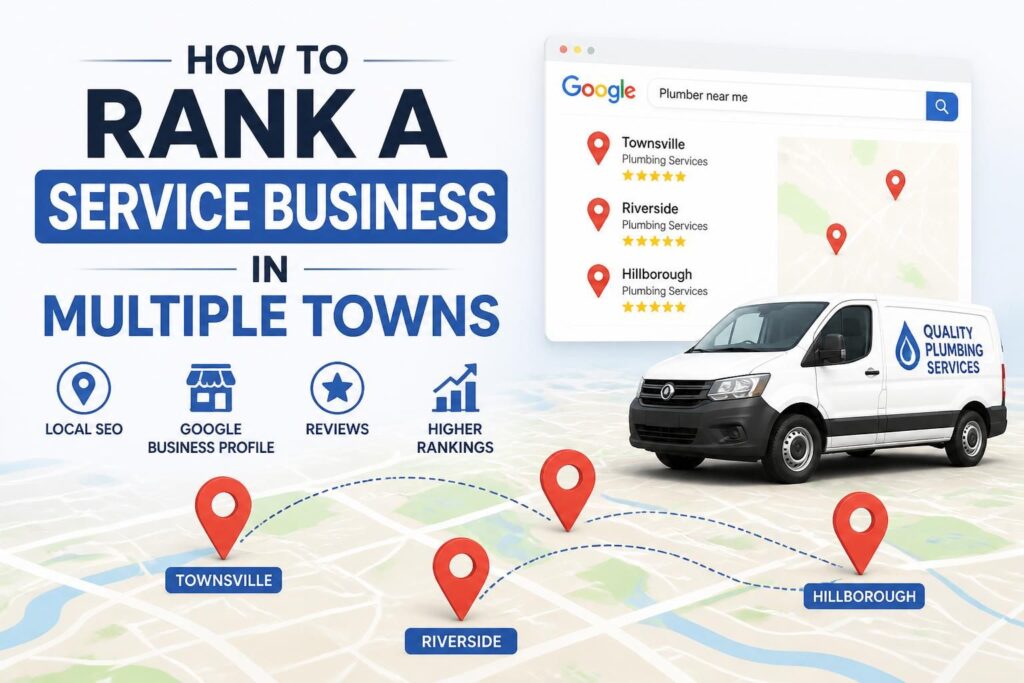
Businesses serving defined areas need both website SEO and accurate local business information. A complete Google Business Profile can support visibility in Google Maps and local results, but the profile must accurately represent the business. Select appropriate categories, maintain current contact details, add useful photographs and keep trading hours accurate.
Google describes local ranking in terms of relevance, distance and prominence in its guidance on improving local ranking. A business cannot optimise away the searcher’s physical distance, but it can improve how clearly its services and location are represented.
Website location signals should be factual. Include the areas you genuinely serve, display consistent business details and publish location-specific information only where you can provide meaningful local value. Creating dozens of near-identical suburb pages can weaken quality rather than improve it.
Reviews also influence customer decisions. Ask genuine customers for honest feedback without dictating what they must write. Respond professionally to both positive and negative reviews, and never purchase reviews or create false customer accounts.
Build authority through evidence, not shortcuts
Links from other websites can help Google discover pages and assess their wider relevance, but link quality matters more than raw quantity. Useful links tend to come from genuine relationships, industry resources, suppliers, professional bodies, local organisations, media coverage or content that other publishers choose to reference.
Avoid services that promise hundreds of links with no explanation of where they will appear. Automated directory submissions, private link networks and irrelevant paid placements can create risk without sending meaningful customers. A sound link-building question is: would this mention still have business value if search engines did not count it?
Authority is also communicated on the website itself. Identify the business responsible for the content, provide working contact options, explain services accurately and make important policies easy to find. For subjects involving finance, health, safety or legal decisions, use qualified review where required and cite dependable sources.
Measure leads and revenue instead of watching one keyword
Rankings vary according to location, device, language, personal context and changes in competing pages. A manually checked keyword position is therefore not a complete performance measure. Monitor a group of indicators that connect search visibility to business results.
- Organic clicks and impressions in Search Console.
- Landing pages attracting relevant search traffic.
- Form submissions, calls, bookings or purchases from organic visits.
- Conversion rate by landing page and device.
- Indexing and technical errors affecting priority pages.
- Visibility for commercially relevant search themes.
Analytics must be configured correctly before conclusions are drawn. Test contact forms and conversion events, exclude obvious internal traffic where appropriate and record major website changes. This makes it easier to distinguish genuine SEO progress from tracking errors or seasonal demand.
A practical order for improving Google rankings
Businesses often lose time by making isolated changes without addressing the largest constraint. Use the following sequence to prioritise work:
- Confirm measurement: Set up Search Console and analytics, then verify that enquiries or sales are being recorded.
- Check accessibility: Make sure priority pages can be crawled, rendered and indexed.
- Map search intent: Assign valuable topics to suitable pages and identify gaps or overlap.
- Improve key commercial pages: Clarify services, outcomes, processes, evidence and calls to action.
- Build supporting content: Answer questions that arise before customers choose a provider.
- Improve internal links: Connect helpful resources to relevant service and conversion pages.
- Address usability and speed: Fix the issues most likely to disrupt real visitors.
- Develop legitimate authority: Earn mentions through expertise, partnerships and useful resources.
- Review results: Compare changes over a meaningful period and refine the next priorities.
This order is not rigid. A hacked website, manual action, failed migration or widespread indexing problem requires immediate attention. For a functioning small-business website, however, the sequence keeps effort focused on work that can improve both visibility and lead generation.
SEO mistakes that waste time and budget
Publishing more pages is not automatically progress. Thin location pages, lightly rewritten articles and duplicated service descriptions increase the number of URLs without increasing usefulness. Other common mistakes include changing URLs without redirects, removing successful content during a redesign, hiding important text in images and measuring an agency only by the number of tasks completed.
Another mistake is separating SEO from conversion. A page can rank and still fail commercially if visitors cannot understand the offer, verify the business or find a sensible next step. Strong SEO brings qualified visitors to a page; clear messaging and usable design help turn those visits into enquiries.
Questions business owners often ask about Google rankings
How long does it take for a website to rank higher?
There is no fixed SEO timeline. Results depend on the website’s current condition, the competitiveness of the search, content quality, technical implementation and the strength of competing sites. Small improvements may appear after Google recrawls a page, while competitive commercial topics often require sustained work over several months.
Can I pay Google for a higher organic ranking?
No. Google Ads can purchase advertising visibility, but paying for ads does not buy a higher organic position. Paid search can generate traffic while SEO develops, and advertising data may reveal useful search demand, but the two channels use separate placement systems.
How often should website content be updated?
Update content when facts, services, examples or customer needs change, or when performance data reveals that a page no longer answers its target search effectively. Changing a publication date or rewriting sentences without improving the information is unlikely to provide lasting value.
Do social media posts directly improve Google rankings?
Social activity is not a substitute for technical SEO, useful website content or credible links. It can still expand content distribution, expose the business to potential customers and create opportunities for genuine mentions. Use social media for audience development rather than treating reactions as a guaranteed ranking factor.
Should every business hire an SEO specialist?
Some basic improvements can be handled internally, particularly when the website is small and someone can maintain content and business information. Professional help becomes valuable when the site has technical problems, operates in a competitive market, has lost traffic, is being redesigned or needs a coordinated strategy tied to measurable leads.
Turn search visibility into qualified enquiries
Higher rankings come from a connected system: technically accessible pages, accurate search targeting, useful content, credible business signals and an experience that helps visitors take action. The right priorities depend on the website’s current weaknesses. Some sites need technical repairs; others need stronger service pages, better local optimisation or a clearer content plan.
Siteweb Online Marketing can assess these areas and identify the work most likely to improve relevant visibility and lead generation. If your business needs a practical plan rather than disconnected SEO tasks, contact Siteweb Online Marketing to discuss your website, target market and growth goals.