How to optimise a Google Business Profile for more leads
September 28, 2026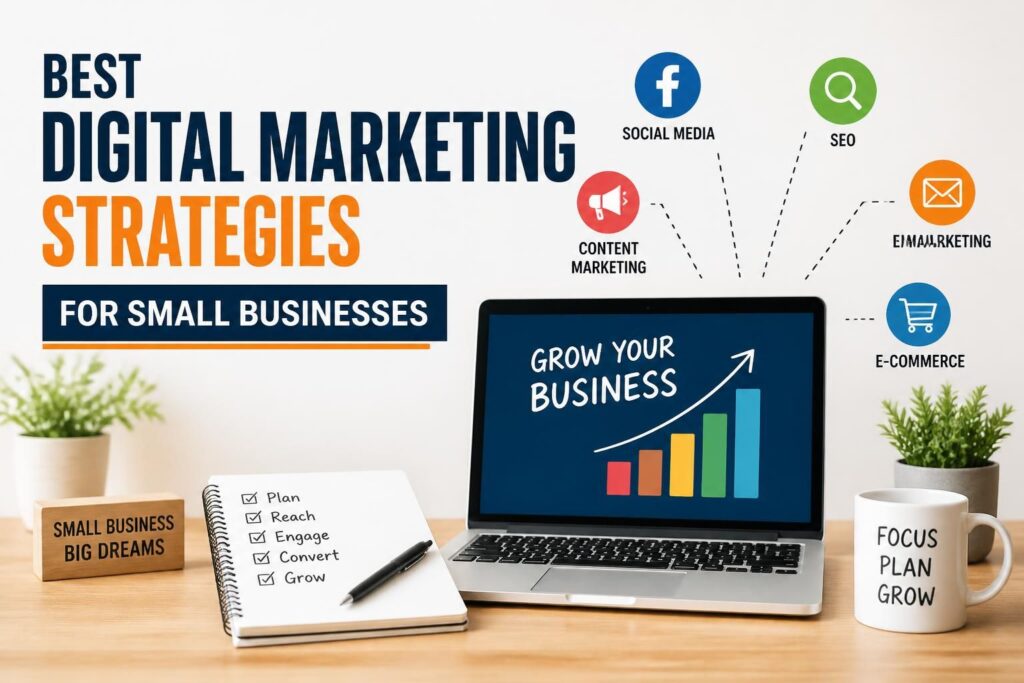




Small businesses rarely need more marketing channels. They need a focused system that attracts the right people, turns interest into enquiries and shows which activities produce revenue. The best digital marketing strategies for small businesses connect search visibility, useful content, paid promotion, social proof and consistent follow-up rather than treating each channel as a separate project.
For South African business owners, the right mix depends on customer location, buying cycle, competition and available capacity. A neighbourhood service provider may benefit most from Google Maps visibility and search advertising, while a business selling specialised services nationally may need educational content, search engine optimisation and a structured lead-nurturing process.
Siteweb services that support a focused marketing strategy
Siteweb Online Marketing helps businesses strengthen the parts of digital marketing that influence visibility, enquiries and lead quality. Relevant services include:
- Google Business Profile optimisation for stronger local search visibility
- Google Ads campaign management for reaching people with active buying intent
- search engine optimisation services for sustainable organic visibility
- generative engine optimisation to make useful business information easier for AI-powered search systems to interpret
- social media marketing for building awareness, engagement and trust
Start with a measurable business objective
A marketing plan should begin with the commercial result the business needs, not with a platform. Goals such as getting more followers or increasing website traffic are incomplete unless they support enquiries, quotations, bookings, sales or repeat business.
Choose one primary objective for the next quarter and define how it will be measured. A local plumbing company might target qualified calls from selected service areas. An accounting practice could focus on consultation requests from small companies. An online retailer may prioritise profitable sales from returning and first-time customers.
Useful performance indicators include:
- Qualified leads received
- Lead-to-sale conversion rate
- Cost per qualified lead
- Revenue attributed to marketing
- Customer acquisition cost
- Average order or contract value
- Repeat purchase and customer retention rates
This approach prevents the business from judging performance through impressions, clicks or follower counts alone. Those figures can help diagnose a campaign, but they do not prove that marketing is commercially effective.
Build a website that turns visits into enquiries
A website is often the point at which a potential customer decides whether a business looks credible enough to contact. Increasing traffic will not solve unclear messaging, slow pages, confusing navigation or a quotation form that asks for too much information.
Each important service page should explain who the service is for, the problem it addresses, what the process involves and what the visitor should do next. Contact details must be easy to find, especially on mobile devices. Calls to action should match the buying stage. A person researching a complex service may prefer to request an assessment, while someone with an urgent local need may want to call immediately.
Check these conversion fundamentals
- Place the main service and customer benefit near the top of the page.
- Create a dedicated page for each commercially important service rather than listing everything on one page.
- Use genuine project examples, reviews or case studies where permission has been obtained.
- Make telephone, email, form and WhatsApp options easy to use where those channels are actively monitored.
- Keep forms short enough to complete on a phone while collecting the information needed to qualify the enquiry.
- Explain the next step so visitors know when and how the business will respond.
- Test forms, call buttons and tracking after website updates.
A useful website does not need exaggerated claims. Specific information about the service, process, service area and expected response is usually more persuasive than broad statements about quality.
Use local search to reach nearby customers
Local search marketing is one of the strongest options for businesses that serve customers in a defined area. It is particularly relevant to trades, professional practices, healthcare providers, restaurants, accommodation businesses and companies with customer-facing premises.
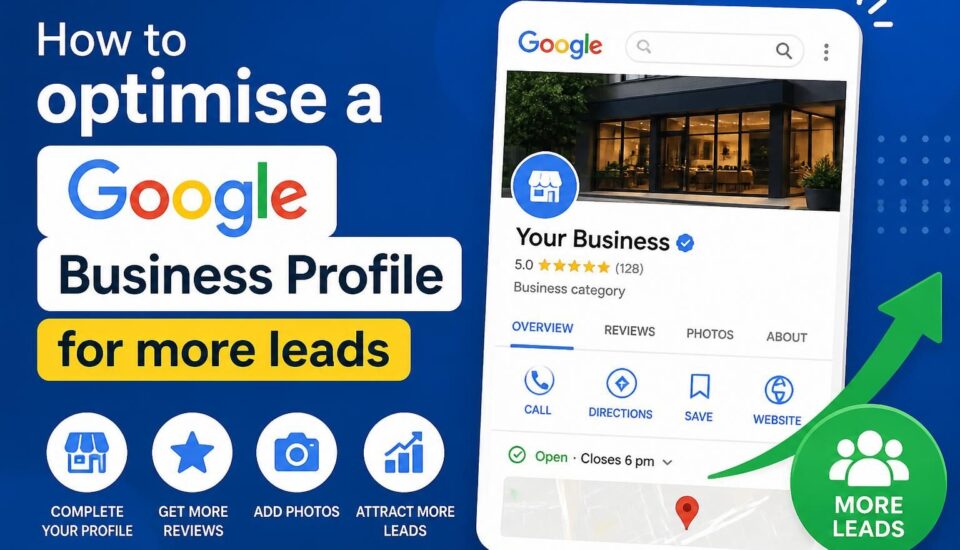
A complete Google Business Profile helps Google connect the business with relevant local searches. The business name, primary category, contact details, opening hours, website and service information should be accurate and consistent. Photographs should represent the real business, team, premises or completed work rather than relying only on generic stock images.
Reviews also influence customer decisions. Ask genuine customers for honest feedback at a natural point after the service or purchase. Respond professionally to positive and negative reviews without exposing confidential customer information. Avoid buying reviews, offering misleading incentives or asking staff to create customer feedback.
Local optimisation should continue on the website. Service pages need clear location context, but repeating a town or suburb in every sentence makes the copy less useful. Include service areas where they help customers confirm availability, and publish distinct location pages only when each page can offer meaningful information.
Create search content around customer decisions
Search engine optimisation works best when content answers questions that arise before a purchase. Instead of publishing broad articles for traffic alone, map topics to customer problems, comparisons, objections and decision criteria.
A solar installation business, for example, could explain system sizing, equipment choices, maintenance and the questions customers should ask before accepting a quotation. A business consultant might publish guidance on process improvement, operational planning and selecting the right advisory service. The topic should lead naturally towards a relevant service without disguising an advertisement as advice.
Prioritise pages with commercial relevance
Begin with strong service pages, then add supporting articles that answer related questions. This creates a clear relationship between educational content and the service that solves the reader’s problem. Link supporting articles to relevant service pages using descriptive anchor text, and link service pages back to helpful resources where appropriate.
Search visibility also depends on technical fundamentals such as crawlable pages, sensible site architecture, mobile usability, descriptive page titles and fast, stable loading. Publishing more content will not compensate for pages that search engines cannot access or users struggle to navigate.
Prepare useful content for AI-assisted search
Search behaviour is expanding beyond traditional results pages. People now use AI-assisted search tools to compare options, gather recommendations and summarise complex topics. Businesses should not create unnatural copy for these systems. They should make reliable information easier to identify and understand.
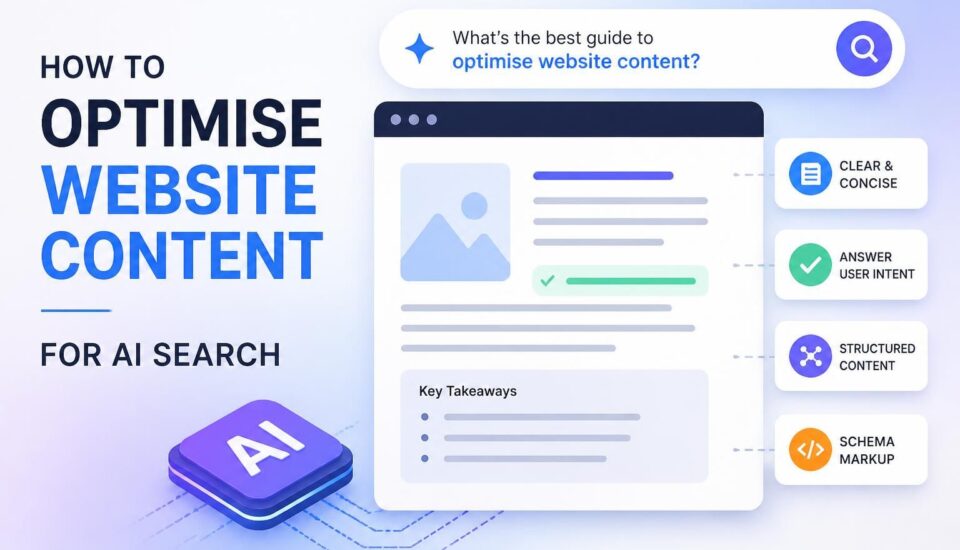
Use clear service descriptions, factual headings, concise answers and consistent information about the business. Explain processes, limitations, locations and terminology directly. Original case studies, expert commentary and detailed answers can provide information that generic summaries do not.
Generative engine optimisation complements SEO rather than replacing it. A technically sound website, recognised brand signals, helpful content and accurate business information remain valuable across traditional and AI-supported discovery.
Use Google Ads for demand that already exists
Google Ads can reach people who are actively searching for a product or service. It is often suitable when the business needs leads sooner than organic search can provide them, when the value of a sale supports paid acquisition or when search demand is clear.
Campaign performance depends on more than choosing keywords. Advertisements should match the searcher’s need and lead to a page that continues the same message. Sending every click to the home page usually makes it harder for visitors to find relevant details.
A controlled campaign should define:
- The services and locations being promoted
- Search themes that show realistic buying intent
- Negative keywords that filter irrelevant searches
- Daily or monthly budget limits
- Conversion actions such as calls, forms, bookings or purchases
- A process for checking lead quality, not only lead volume
Paid search is not automatically profitable. Competitive click costs, weak landing pages and slow sales follow-up can undermine an otherwise well-configured campaign. Start with a narrow scope, collect enough data to make informed decisions and expand only when the economics make sense.
Choose social media channels based on customer behaviour
A small business does not need to be active on every social network. It needs to show up consistently where customers pay attention and where the business can produce credible content.
Facebook and Instagram may suit visually engaging consumer products, hospitality, property and local services. LinkedIn can support business-to-business marketing, professional services and recruitment. Short-form video can demonstrate products or explain practical topics, but only if the format suits the audience and the business can maintain an acceptable standard.
Effective content normally combines several purposes. Educational posts answer questions. Evidence-based posts show work, customer outcomes or product applications. Brand posts reveal the people and operating approach behind the business. Promotional posts make a clear offer. Repeating sales messages without offering useful context tends to weaken engagement.
Organic social media usually supports awareness and trust rather than capturing all available demand. If reach is limited, paid social campaigns can distribute strong content to a defined audience. Campaigns should still have a clear objective, suitable landing page and reliable measurement.
Build an audience the business can contact again
Email remains useful because it allows a business to follow up with people who have chosen to hear from it. A mailing list can support repeat sales, appointment reminders, educational sequences, event promotion and longer buying cycles.
Give people a clear reason to subscribe, such as a practical guide, quotation follow-up, product updates or relevant advice. Segment messages where customer needs differ. A past customer should not always receive the same message as a new prospect who downloaded a guide.
South African businesses should handle personal information and direct marketing in line with applicable requirements, including the Protection of Personal Information Act. Consent, lawful processing, secure handling of information and a practical unsubscribe method should form part of the process. Businesses requiring legal interpretation should obtain qualified advice rather than relying on marketing guidance alone.
Track leads from first click to sale
Measurement is where many small-business strategies break down. Website analytics may show where a visitor came from, but the business also needs to know whether that person became a suitable lead and eventually a customer.
Configure tracking for meaningful actions such as completed forms, telephone calls, messaging clicks, bookings and online purchases. Use consistent campaign tagging where appropriate. Record the original source in a customer relationship management system or a well-managed lead sheet, then update the outcome after the sales conversation.
A monthly review should answer four questions:
- Which channels produced qualified enquiries?
- Which campaigns or pages produced those enquiries?
- How many leads became customers, and what revenue did they generate?
- What should be stopped, corrected, tested or expanded next month?
Attribution will not always be perfect. A customer may see a social post, return through Google and then call after a referral. Use tracking as decision support rather than treating one report as an unquestionable version of the full customer journey.
Allocate budget according to evidence
There is no universal percentage that every small business should spend on digital marketing. The practical budget depends on margins, average customer value, sales capacity, competition, growth targets and the cost of reaching the intended audience.
Protect budget for the foundations first: a functional website, clear service pages, accurate business information and conversion tracking. Then fund one or two channels that match the strongest customer intent. A local service business might combine Google Business Profile optimisation with tightly targeted search advertising. A specialist business-to-business provider may invest more heavily in SEO, expert content and LinkedIn distribution.
Avoid splitting a modest budget across too many platforms. Each channel needs enough time, creative input and data to be evaluated fairly. Review performance by lead quality and customer value, not by which platform reports the highest number of clicks.
A practical 90-day marketing plan
- Weeks 1 to 2: Set one commercial objective, define the target customer, review competitors and document how leads currently arrive.
- Weeks 3 to 4: Correct website messaging, contact paths, service pages, local listings and conversion tracking.
- Weeks 5 to 8: Launch the highest-priority channel, such as local SEO, Google Ads, search content or a focused social campaign.
- Weeks 9 to 10: Review search terms, enquiries, landing-page behaviour and sales feedback. Correct obvious sources of wasted spend or friction.
- Weeks 11 to 12: Compare results with the original objective, document what was learned and plan the next test or expansion.
This sequence keeps the business from launching campaigns before it can convert and measure the resulting traffic. It also creates a repeatable cycle of planning, implementation and improvement.
Common mistakes that waste time and budget
- Choosing platforms because competitors use them without confirming where customers actually search
- Sending paid traffic to a generic home page
- Publishing low-value articles that do not answer customer questions
- Changing campaigns too frequently to collect useful evidence
- Measuring leads without checking whether they were qualified
- Ignoring missed calls and slow responses after paying to generate enquiries
- Relying on one platform without building a website, mailing list or other owned asset
- Using inconsistent business names, contact details or service information across online profiles
The most expensive problem is not always advertising cost. Weak follow-up can waste every activity that came before the enquiry. Assign responsibility for responding to leads, set a realistic response standard and record the outcome.
Questions small business owners ask about digital marketing
What is the best digital marketing strategy for a small business?
The best strategy is the combination that matches how customers discover, evaluate and contact the business. For many local service businesses, this means a conversion-focused website, an optimised Google Business Profile, local SEO and targeted Google Ads. Businesses with longer sales cycles may need educational content, email follow-up and professional social media activity.
Should a small business choose SEO or Google Ads?
SEO supports longer-term organic visibility, while Google Ads can produce exposure as soon as an eligible campaign is active. Many businesses benefit from using both: advertising captures immediate demand and provides search data, while SEO develops useful pages and organic visibility over time. The right choice depends on urgency, competition, budget and lead value.
How long does digital marketing take to work?
Timelines vary by channel. Paid campaigns can begin generating traffic quickly, but optimisation and sales data take longer. SEO usually requires sustained technical work, content improvement and authority development before meaningful gains become visible. Social media and email performance also depend on audience size, content quality and consistency. Be cautious of anyone promising guaranteed rankings or a fixed number of leads without assessing the market.
Does every business need social media?
Most businesses benefit from maintaining accurate profiles on platforms customers use, but not every company needs daily posting or a presence on every network. A limited, well-managed presence is better than several abandoned profiles. Search visibility, referrals and email may deserve more investment if social platforms do not match customer behaviour.
How can a business tell whether marketing is working?
Track qualified enquiries, conversion rates, acquisition cost and revenue by source. Platform metrics such as reach, clicks and impressions provide diagnostic information, but commercial outcomes show whether marketing is contributing to the business.
Turn separate marketing activities into a lead-generation system
Strong small-business marketing is built through clear priorities and consistent execution. The website explains the offer, search channels capture demand, social media develops familiarity, email supports follow-up and measurement reveals where the next rand or hour should be invested.
Siteweb Online Marketing can help assess your current visibility, identify gaps and develop a practical plan around the channels most likely to improve lead generation. To discuss your website, search marketing, Google Ads, local presence or social media activity, contact Siteweb for a digital marketing consultation.