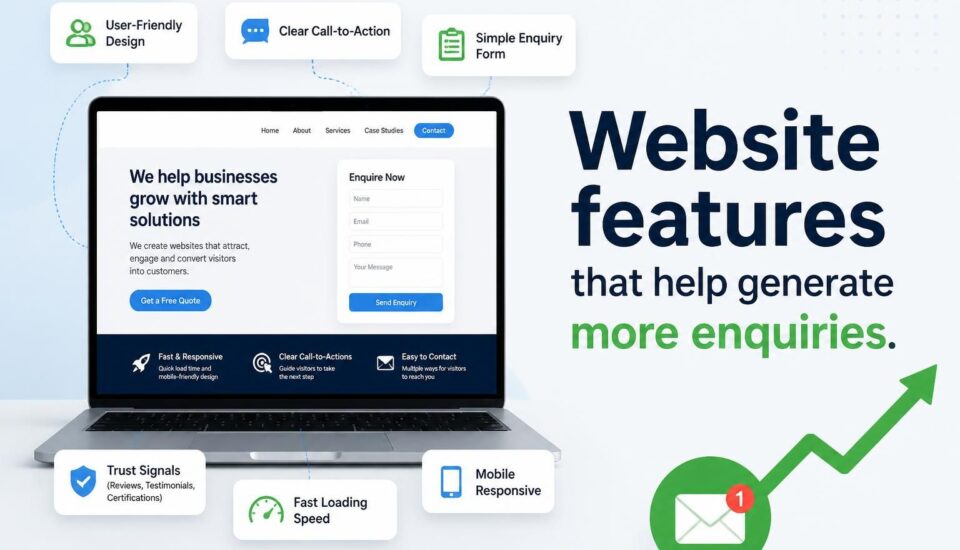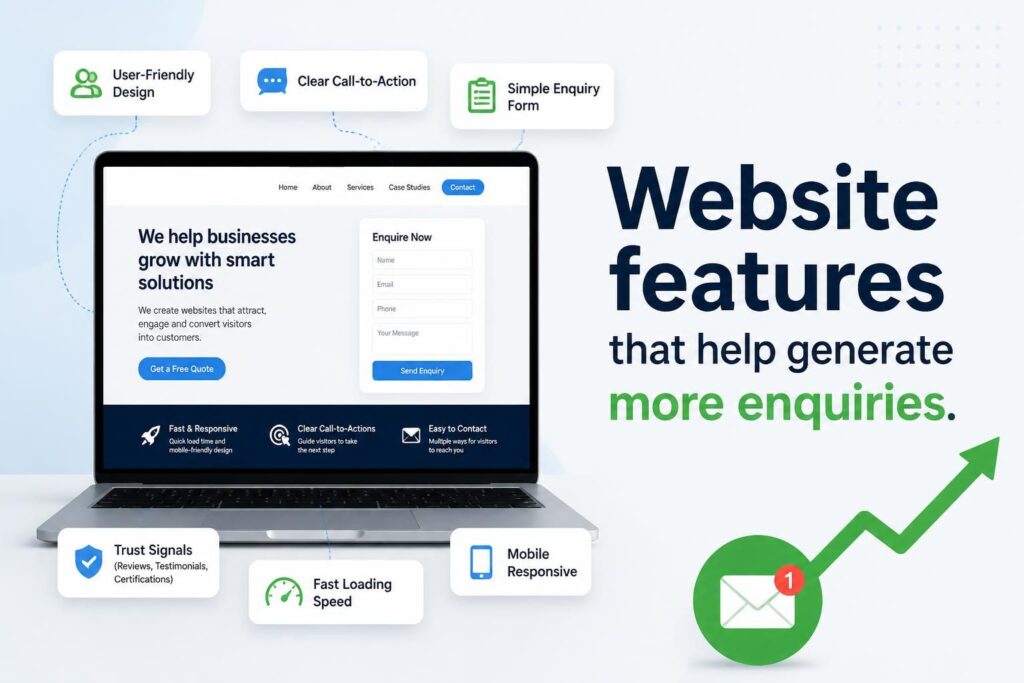
Website features that help generate more enquiries
October 19, 2026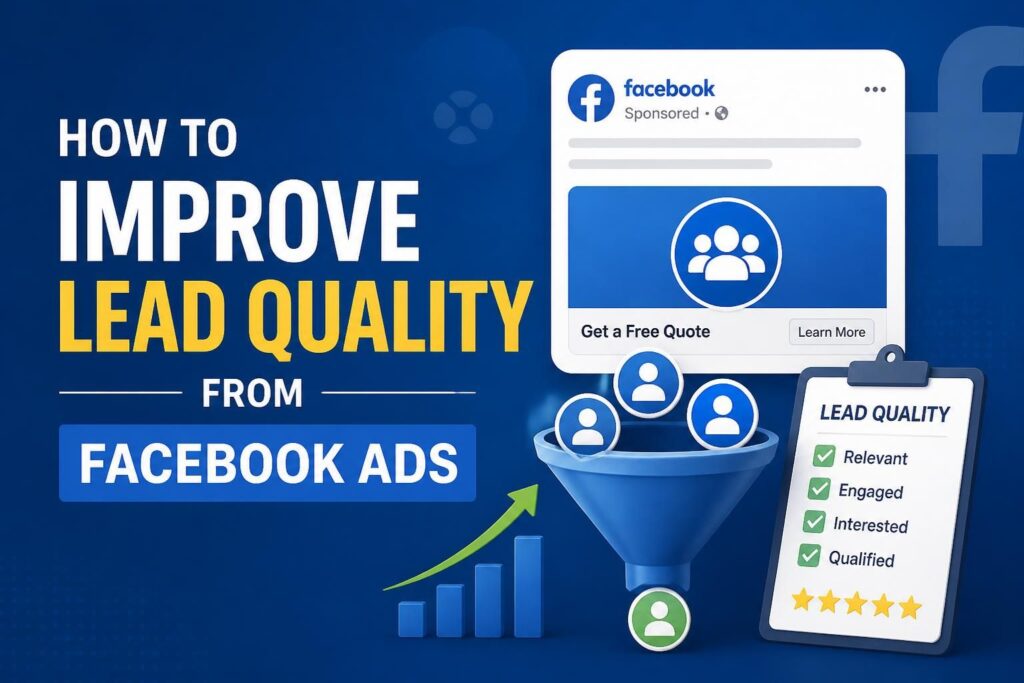




Poor lead quality from Facebook Ads is rarely caused by one setting. It usually develops when broad targeting, an easy conversion path and weak follow-up allow people with limited intent to become leads. The campaign may produce an attractive cost per lead while sales teams struggle with incorrect details, unanswered calls and enquiries that do not match the offer.
Improving lead quality requires Facebook’s advertising system, the offer, the form and the sales process to work towards the same definition of a qualified lead. The practical steps below show South African business owners how to make that shift without simply reducing lead volume or raising the budget.
Build stronger visibility across your digital channels
Facebook campaigns perform better when prospects can verify the business and find consistent information elsewhere. Siteweb Online Marketing can support that wider customer journey through:
- Google Business Profile optimisation to strengthen local visibility and business information.
- Google Ads campaign management for prospects actively searching for relevant products or services.
- search engine optimisation services that build organic search visibility.
- generative engine optimisation that helps useful brand information become easier for AI-powered search systems to interpret.
- social media marketing services covering strategy, content and paid campaign support.
Define lead quality before changing the campaign
A qualified lead is not simply someone who completed a form. It is a person or business that fits the offer, has a relevant need and can realistically take the next step. If marketing and sales teams use different definitions, Facebook receives unclear feedback and campaign reports become misleading.
Create a written qualification standard using criteria that sales staff can assess consistently. Depending on the business, this may include:
- The product or service requested.
- Location or service area.
- Budget range or purchasing capacity.
- Business size, industry or job role.
- Expected purchase timeframe.
- Authority to make or influence the decision.
- A specific problem that the business can solve.
A solar installer might treat property ownership, installation location and electricity usage as meaningful criteria. A business-to-business consultancy may care more about company size, the prospect’s role and the problem being addressed. A retailer may define quality through product interest, delivery area and purchasing timeframe.
Agree on the stages that come after a form submission as well. Useful stages include new lead, contacted, qualified, appointment booked, proposal issued, sale won and disqualified. Record the reason for disqualification instead of using one broad rejected category. Common reasons such as outside service area, insufficient budget, duplicate enquiry, student research or unreachable contact details reveal where the campaign needs work.
Choose a campaign goal that reflects the real business result
Meta’s delivery system looks for people who are likely to complete the action selected during campaign setup. If the campaign is optimised for inexpensive form submissions, it may find frequent form submitters rather than likely customers. The difference matters because the lowest-cost lead is not always the lead most likely to buy.
Use a lead-focused campaign setup and select the conversion location that suits the sales journey. Instant forms reduce friction because people remain within Facebook or Instagram. Website forms provide more control over page content, validation, tracking and qualification. Messaging can work where prospects need a short conversation before sharing details. Calls may suit urgent or high-intent local services when someone is available to answer promptly.
The right choice depends on how customers prefer to enquire and how the business handles those enquiries. Do not select an instant form merely because it produces the lowest reported cost per lead. Compare each route using qualified lead rate, appointment rate and sales value.
Use targeting to remove obvious mismatches
Targeting should give Meta enough room to learn while excluding people the business cannot serve. Very narrow audiences can restrict delivery and raise costs, but unrestricted targeting may generate avoidable enquiries when the offer has firm geographic or customer requirements.
Set location targeting around the actual service area
South African campaigns need particular care when the business only serves selected provinces, cities or suburbs. A company operating in Gauteng should not pay for leads from Cape Town simply because nationwide targeting produced cheaper form submissions. Check the location settings, radius and exclusions, then compare lead quality by area.
Ad copy can reinforce the location requirement. Mentioning the serviced city or region helps people self-select before clicking. For businesses that deliver nationally, explain any delivery restrictions or additional charges before asking for contact details.
Test broad, interest-based and first-party audiences separately
Combining every audience type in one ad set makes it difficult to see where valuable leads originate. Where budget permits, separate meaningful tests such as:
- Broader audiences guided by clear creative and conversion data.
- Relevant interest or demographic audiences.
- Website visitors and engaged social media users.
- Customer or qualified-lead lists uploaded with the necessary permissions.
- Lookalike audiences based on customers or qualified leads rather than all form submissions.
Exclude existing customers, employees and recent leads when they should not see an acquisition offer. Audience controls and features change over time, so confirm current options inside Meta Ads Manager rather than relying on an old campaign tutorial.
Make the advertisement qualify people before they click
An ad should do more than attract attention. It should explain who the offer suits, what the person will receive and what happens after the enquiry. Vague promises tend to attract curiosity clicks from people who have not assessed whether the service is relevant.
Useful qualifying details may include the customer type, location, starting requirements, service scope, expected commitment and the problem being solved. If price is a major source of unsuitable enquiries, consider stating a legitimate starting price or range. Only publish pricing that the business can explain accurately; hiding every cost may increase lead volume while wasting sales time.
Creative should also match the service being sold. Stock imagery and broad claims may produce engagement without commercial intent. Product demonstrations, before-and-after examples, process explanations, screenshots, credible customer outcomes and staff-led videos can give prospects a clearer basis for deciding.
Keep the promise consistent from the ad to the form or landing page. If an advertisement offers a quotation, do not send the visitor to a generic page that asks them to search for the relevant service. Message mismatch often causes abandonment and low-confidence enquiries.
Add useful friction to Facebook lead forms
The best form is not necessarily the shortest form. A form should be easy enough for suitable prospects to complete, but detailed enough to discourage accidental submissions and identify obvious mismatches. Every question should either help qualify the lead, route the enquiry or prepare the sales conversation.
Start with a clear form introduction that repeats the offer and explains what will happen next. Then add a small number of qualifying questions. Multiple-choice questions are easier to analyse than open text, while one carefully selected free-text question can show whether the person has a specific need.
Examples of practical questions include:
- Which service are you interested in?
- Where is the work or delivery required?
- When would you like to start?
- Which budget range applies to the project?
- Are you the business owner or decision-maker?
- What result are you trying to achieve?
Do not ask for sensitive or unnecessary personal information. Explain how information will be used and link to an appropriate privacy notice. South African organisations should ensure that lead collection, storage, access and follow-up practices align with the Protection of Personal Information Act. The Information Regulator’s POPIA resources provide official guidance.
Review the form completion settings available in the account. Meta may offer form types or review steps designed to favour higher intent. Interface labels can change, so assess the current options and test them against qualified outcomes rather than assuming one setting will always perform best.
Improve website landing pages for higher-intent enquiries
A website landing page introduces more friction than an instant form, but that is not always a disadvantage. People who read the offer, review evidence and complete a relevant form may have stronger intent. Website campaigns also give the business more control over qualification, analytics and page experience.
A focused lead-generation page should contain:
- A headline that matches the advertisement.
- A concise explanation of the offer and intended customer.
- Service scope, exclusions and eligibility requirements.
- Evidence that helps visitors assess the business.
- A form with the minimum information required for qualification.
- A visible privacy notice and consent wording where applicable.
- A clear statement about the next step and expected response process.
Test the page on a mobile phone using a normal mobile data connection. Slow loading, difficult fields, small buttons and intrusive pop-ups can reduce conversions or cause people to submit incomplete information. Confirm that thank-you pages, analytics events and advertising tags fire correctly without recording duplicate conversions.
Send qualified sales outcomes back to Meta
Campaign optimisation improves when the platform receives information about outcomes beyond the initial form submission. If every lead is treated as equally valuable, Meta cannot distinguish a genuine sales opportunity from an invalid number.
A customer relationship management system can help connect the advertising campaign to later stages. Record each lead’s source, campaign, ad and qualification status where possible. Depending on the available systems and consent framework, businesses may use Meta’s supported integrations or Conversions API to send relevant downstream events back to the platform. Meta provides current technical and campaign guidance through its Business Help Centre.
Implementation should be checked by someone who understands both the advertising account and the CRM. Event names, identifiers and timestamps need to be mapped consistently. Privacy controls and data-processing responsibilities must also be addressed. A technically active integration is not useful if it sends duplicate, incomplete or incorrectly classified events.
Measure the cost of a qualified lead, not only form submissions
Cost per lead can hide poor commercial performance. A campaign producing 100 cheap leads may be less valuable than one producing 30 enquiries that result in more appointments and sales.
Track the funnel using measures such as:
- Contact rate: the percentage of leads reached successfully.
- Qualification rate: qualified leads divided by total leads.
- Appointment rate: booked appointments divided by total or qualified leads.
- Show rate: attended appointments divided by booked appointments.
- Sales conversion rate: customers divided by leads or qualified leads.
- Cost per qualified lead: advertising spend divided by qualified leads.
- Customer acquisition cost: relevant acquisition costs divided by new customers.
Suppose Campaign A spends R10,000 and produces 100 leads, of which 10 qualify. Its cost per lead is R100, but its cost per qualified lead is R1,000. Campaign B spends the same amount and produces 50 leads, of which 20 qualify. Its cost per lead is R200, yet its cost per qualified lead is R500. Judged only by initial lead cost, the stronger campaign would appear worse.
Revenue and profit should guide decisions where the sales cycle allows reliable tracking. A campaign can have a higher acquisition cost and still be more valuable if it attracts larger or repeat customers.
Lead response speed and handling affect perceived quality
Some apparently poor leads are mishandled leads. Interest fades, people submit forms to several providers and unknown calls are often ignored. A delayed response makes it harder to contact prospects and assess their original intent.
Create a practical follow-up sequence before increasing campaign spend:
- Send an immediate confirmation explaining who will make contact and from which number or channel.
- Route the lead to the correct person based on service, location or urgency.
- Make the first personal contact as soon as the team can respond consistently.
- Use more than one approved channel where the prospect has provided appropriate consent.
- Record every attempt and the final outcome in the CRM or lead register.
- Review disqualification reasons with the person managing the advertising campaign.
Sales staff should know which ad and offer generated the enquiry. Opening with a relevant reference is more credible than asking whether the prospect remembers completing a random online form. If the team cannot handle leads promptly, adjust campaign schedules, daily budgets or automated confirmations to match operational capacity.
Test one quality hypothesis at a time
Changing targeting, creative, form questions and optimisation settings simultaneously prevents a reliable diagnosis. Begin with the largest source of poor quality, then design a test around it.
If many leads fall outside the service area, revise location controls and state the area in the ad. If prospects lack sufficient budget, test transparent price guidance or a budget question. If contact details are invalid, add a review step and examine the lead source. If qualified leads are not becoming appointments, investigate the offer and follow-up process rather than blaming targeting.
Allow tests enough time and conversion volume to produce useful evidence. Avoid switching campaigns off after a handful of leads unless there is an obvious technical, compliance or targeting problem. Keep a testing record containing the hypothesis, change, date, spend, lead count, qualified count and commercial outcome.
Common changes that can make lead quality worse
Some popular campaign adjustments improve surface-level metrics while weakening sales results. Watch for these mistakes:
- Optimising exclusively for the cheapest lead.
- Using a competition or giveaway audience for a high-value sales offer.
- Asking no questions beyond a name and contact number.
- Making unsupported claims to increase clicks.
- Combining unrelated services in one advertisement and form.
- Using old customer lists without checking permissions and data quality.
- Ignoring comments that reveal confusion about the offer.
- Leaving test leads, duplicates and spam classified as genuine enquiries.
- Scaling the budget before confirming that sales staff can handle the volume.
Retargeting is also frequently misused. Showing the same sales message repeatedly to everyone who watched a few seconds of a video does not create intent. Segment retargeting by meaningful behaviour, exclude converted users where appropriate and use content that answers the next likely objection.
A practical lead-quality audit
Before rebuilding the account, audit the full path from advertisement to sale. The following sequence keeps the investigation tied to business outcomes:
- Write down the characteristics of a qualified and disqualified lead.
- Export campaign, ad set and ad results for a useful comparison period.
- Match leads to CRM stages, appointments and sales where reliable data exists.
- Break down quality by campaign, offer, location, placement and audience where data permits.
- Read the ads and complete each form as a prospect would.
- Check mobile landing-page speed, form validation and tracking.
- Listen to or review sales feedback without accepting vague labels such as bad leads.
- Rank proposed changes by likely effect and ease of implementation.
- Test changes separately and evaluate qualified lead cost.
This audit often shows that the advertising account is only part of the issue. A weak offer, confusing page, missing CRM fields or slow response can reduce the value of otherwise relevant traffic.
Questions business owners often ask about Facebook lead quality
Why am I getting many Facebook leads but few sales?
The campaign may be attracting low-intent users, but the cause can also lie after submission. Check qualification rate, response time, appointment attendance, sales handling and offer-market fit. Match each lead to a final outcome before deciding that Facebook itself is the problem.
Should I use a Facebook instant form or a website form?
Instant forms usually offer a convenient mobile experience and can generate more submissions. Website forms provide greater control over information, qualification and tracking. Test both against cost per qualified lead and customer acquisition cost. The cheapest submission route should not be assumed to be the best.
Do more form questions improve lead quality?
Relevant questions can improve self-selection and give sales staff better context. Too many questions may discourage suitable prospects. Ask only what is needed to establish fit, route the enquiry or prepare the next conversation.
Does broad targeting cause poor leads?
Not automatically. Broad targeting can work when the advertisement clearly identifies the right customer and the campaign receives useful conversion feedback. It is less suitable when the business has strict service areas or eligibility requirements that are not communicated elsewhere.
How quickly should Facebook leads be contacted?
Respond as soon as the business can do so consistently and professionally. Send an immediate confirmation, explain the next step and route the enquiry correctly. Measure contact and qualification rates by response interval to establish what works for the sales process.
Turn campaign data into better sales opportunities
Improving lead quality from Facebook Ads requires more than changing interests or adding another question to a form. The business needs a clear qualification standard, honest advertising, an appropriate conversion path, accurate downstream tracking and a dependable follow-up process. Those elements give Meta better signals while helping prospects decide whether the offer fits their needs.
Siteweb Online Marketing can review the campaign journey from advertisement and audience through to form, landing page and measurable lead outcome. If your business is spending money on enquiries that rarely become real opportunities, contact Siteweb to discuss improving your lead-generation campaigns.
Sources and further guidance
- Meta Business Help Centre for current advertising, lead and measurement documentation.
- Information Regulator South Africa: POPIA resources for official privacy guidance.